
Ubuntu 26.04: coming to terms with the past, forward-looking
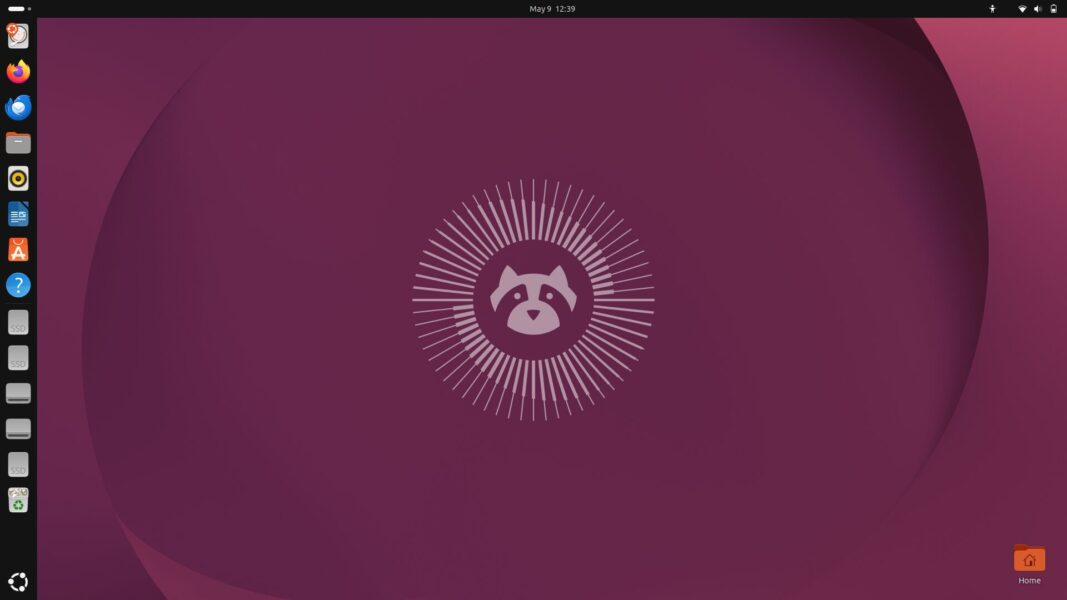
Ubuntu 26.04 LTS, released on April 23, 2026, nicknamed “Resolute Raccoon,” breaks with tradition, incorporates innovations introduced in previous semi-annual releases, and benefits not least from many upstream improvements such as the recently released Linux Kernel 7.0 or—on the desktop—Gnome 50. LTS stands for Long-Term Support: Canonical, the company behind Ubuntu, promises five years of updates for these versions, which are released every two years. Holders of an Ubuntu Pro subscription, which is free for individuals, receive ten years of support, and there is an extended offer up to 15 years.
Wayland-Status bei den Ubuntu-“Flavours”
While GNOME no longer works with the X server at all, Kubuntu with KDE still offers a workaround: the plasma-session-x11 package allows you to install X support retroactively. However, no one is willing to provide official support for this anymore. The situation is different for the smaller desktop environments: Lubuntu (LXDE), Xubuntu (Xfce), and Ubuntu Mate continue to rely on X11, as the Herculean task of porting to Wayland has not yet been completed. In contrast, Ubuntu Budgie is “Wayland only.”
The xserver-xorg package will not be removed from the package repositories, but it is no longer officially supported by Ubuntu and will therefore be moved from the Main repository to the Universe repository.
With regard to system requirements, Ubuntu has raised the bar for memory: a minimum of 6 GB of RAM is now required.
Although Ubuntu is available in numerous “flavors” with different desktop environments, the GNOME desktop comes preinstalled by default. Here, Ubuntu 26.04 LTS benefits from GNOME 50, which was released a month earlier and, for the first time, allows for seamless scaling of screen content (“fractional scaling”) without the “beta” label. A new feature is the ability for parents to limit their children’s screen time. Significant improvements have been made to the Orca screen reader, the file manager, the document viewer, and the calendar app.
Die KDE-Version Kubuntu hat das Upgrade der zugrundeliegenden Grafik-Bibliothek Qt vollzogen. Qt6 erschien bereits 2000Das trifft allerdings nicht auf alle Anwendungen zu. Ein Beispiel: der beliebte Medienspieler VLC. Deshalb wird auch Qt5 noch mitgeliefert.
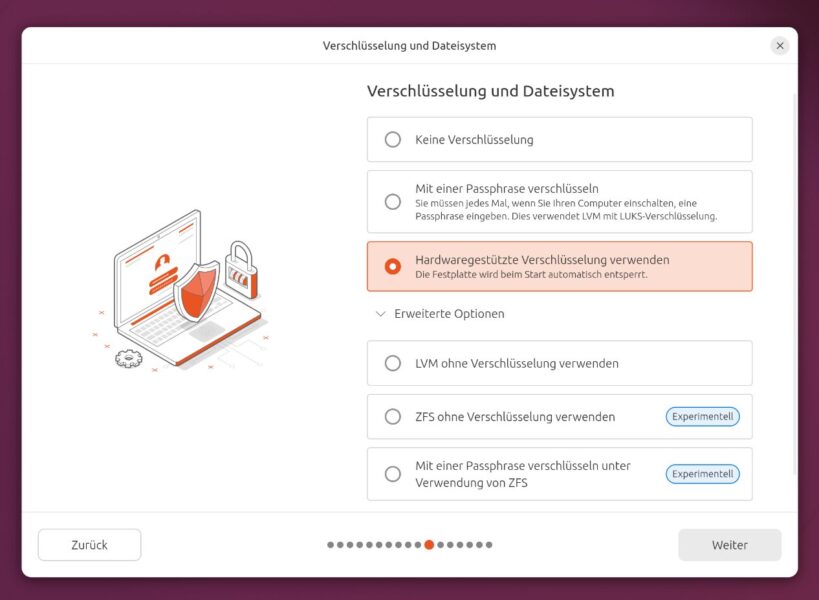
After a slow but steady development process, the new Ubuntu installer – programmed in Flutter – has reached maturity in Ubuntu 26.04. It now allows Ubuntu to be installed on an encrypted system with keys stored in TPM. Of course, this requires a compatible chip in the computera, and including on userspace kernel modules via DKMS is a deal-breaker. The only exception: the proprietary Nvidia graphics driver. The installer can detect this.
See the release notes for more.